
You’ve seen the option at checkout: buy what you want today and split the cost into four payments over time, no hard credit check required. Nearly half of Americans (48%) have used Buy Now, Pay Later (BNPL) at some point, and right now, 13% of U.S. adults carry an active BNPL balance.
The plan works as advertised for many users. But new survey data from nearly 1,200 U.S. adults paints a more complicated picture for many users. Nearly half of people who have used BNPL (47%) have experienced at least one financial consequence — from missing a payment to having to skip other bills to stay current.
Key Takeaways
- A third of Buy Now, Pay Later users (33%) expected their last plan to run seven months or longer and reality tracked closely with those expectations.
- Roughly one in four Americans considers BNPL as something other than traditional debt.
- One in four BNPL users has financed medical or dental expenses through an installment plan.
- Among 18- to 34-year-olds, one in three don’t consider BNPL the same as traditional debt.
Roughly 1 in 4 Americans Don’t Consider Buy Now, Pay Later the Same as Traditional Debt
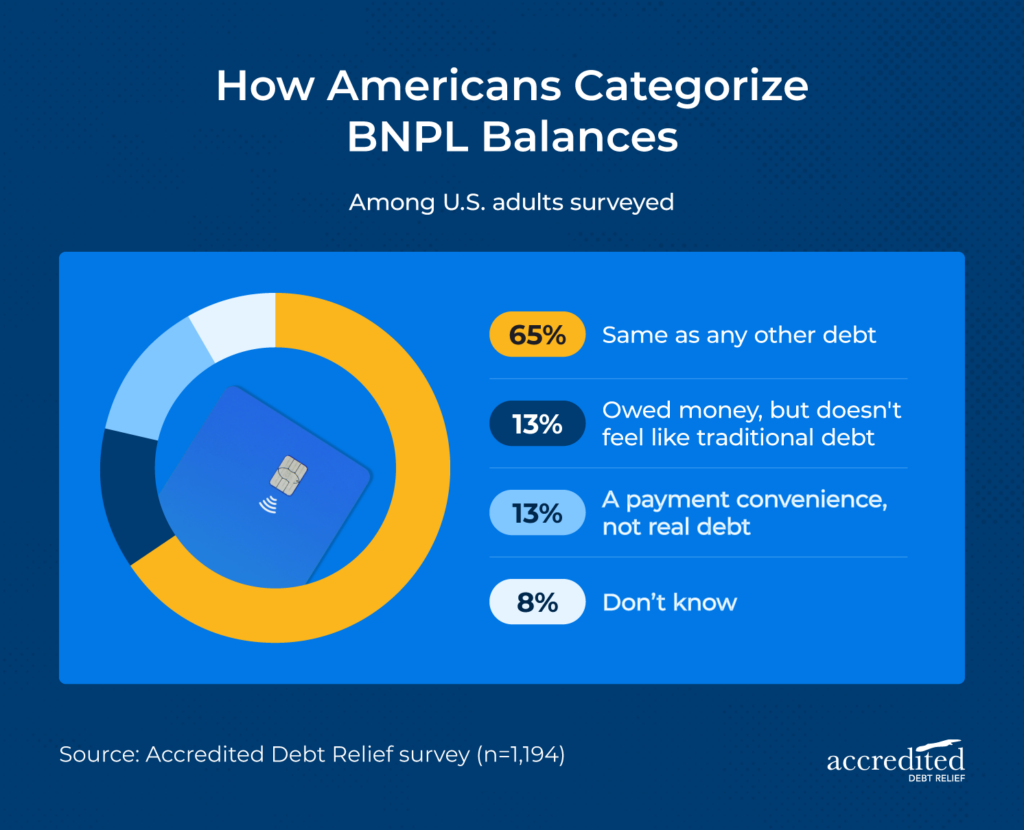
Most Americans know BNPL is debt. 65% of U.S. adults say BNPL and retail installment balances are the same as any other debt.
But roughly one in four adults sees BNPL as something softer. 13% say they know money is owed, but it doesn’t feel like traditional debt. Another 13% consider it a payment convenience rather than real debt. That’s a significant slice of users applying a different standard to these balances than they potentially would to a credit card or a loan.
Age also sharpens the picture. Among adults 18 to 34, about one in three (35%) don’t view BNPL the same way they view traditional debt. This suggests younger adults relate to these balances differently, even when they’re aware money is owed.
The data suggests that even among those who recognize BNPL as debt, actively managing multiple plans across different providers is where things get complicated.
Nearly Half of BNPL Users Have Experienced at Least One Financial Consequence
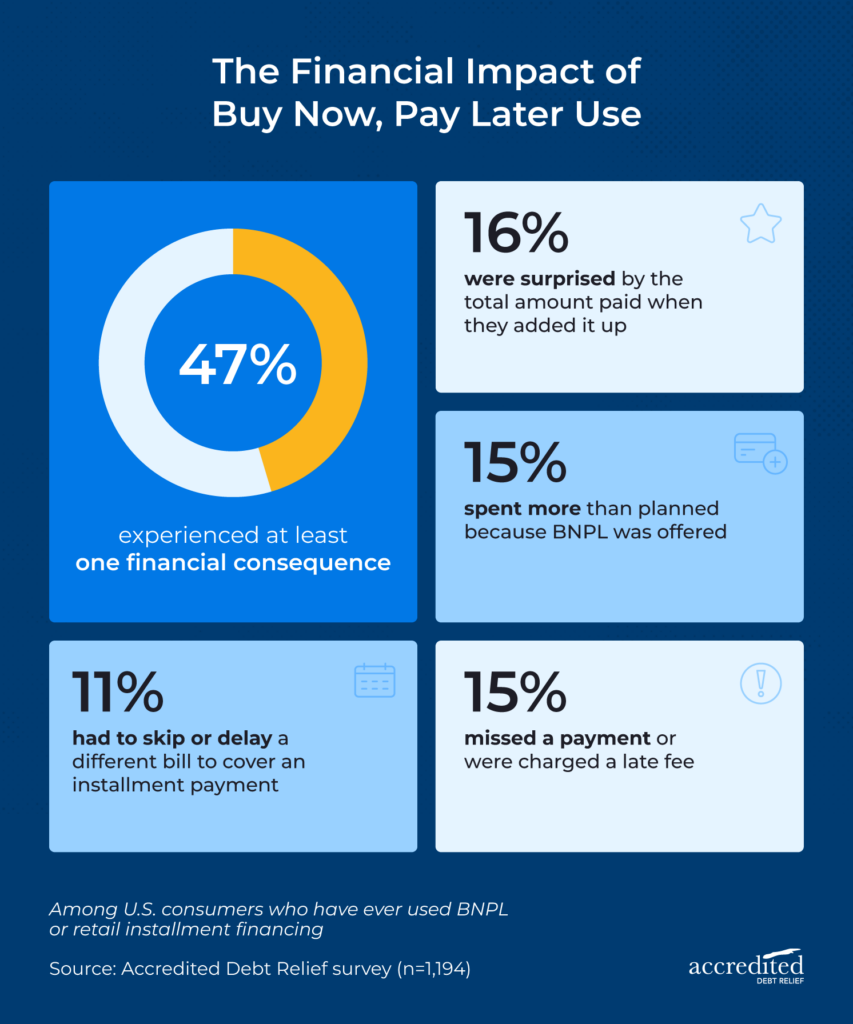
For most people, BNPL does what it promises. But nearly half of users (47%) have experienced at least one financial consequence related to a plan.
Splitting the bill at the moment of purchase can make it easier to spend more than originally planned. 15% of respondents say they spent more than intended because the option was there at checkout. Another 11% have delayed or skipped another bill, such as rent or a utility payment, to stay current on an installment. Once a plan starts competing with the essentials, it’s no longer just a convenience.
Then there’s the tracking problem. Juggling multiple plans across different apps and providers makes it hard to see the full total at a glance. 16% of users say they were surprised by how much they’d paid once they added it all up and 11% admit they lost count of how many plans they had going at the same time.
Getting surprised by the running total or losing track of active plans both point to the same issue: juggling multiple balances makes it harder to see the complete financial picture at a glance. Anyone who’s paid credit card minimum payments and then looked up to see how little the balance moved knows the feeling. This challenge is especially concrete for the 15% of users who have missed a payment or been charged a late fee.
When BNPL Covers Groceries and Medical Bills, Long Repayment Timelines Follow
For big purchases like electronics or furniture, a multi-month repayment plan makes intuitive sense. But BNPL has expanded into other categories as well.
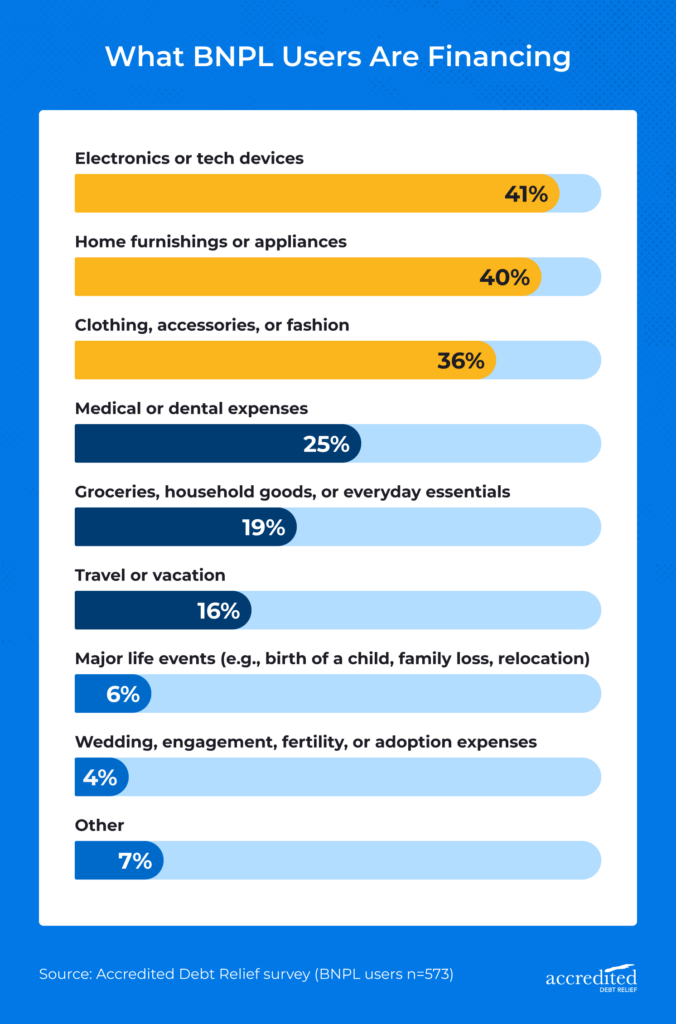
One in four people surveyed (25%) have used it for medical or dental expenses, and nearly one in five (19%) have used it for groceries and everyday essentials. These are recurring costs that don’t stop while you’re still paying off the last plan.
Among U.S. adults using BNPL, 36% expected their last plan to wrap up in three months or less and 33% expected to be paying for seven months or longer. Actual timelines tracked closely with those expectations: 38% finished within three months and 29% were still paying at seven months or beyond.
The most common purchase categories for BNPL plans help put that in context. Electronics tops the list (41%), followed by home furnishings (40%) and clothing (36%). The presence of medical bills and groceries on that list suggests that many shoppers are financing costs that couldn’t be deferred or planned for.
That dynamic makes it harder to pay down plans quickly and easier to lose track of how many are running at once.
What the Data Means for Your Debt Picture
For many users, BNPL fits naturally into their existing shopping habits. But since those payments are quietly auto-deducting in the background, it’s easy to overlook how quickly they add up.
If you’re carrying multiple plans, start with a simple exercise. List every active BNPL and installment balance you have, write down the monthly payment on each, and add them up. Comparing that total against your take-home pay can quickly clarify where your budget actually stands.
If the total gives you pause, you’ve got options. Walking through a few practical first moves can help you regain your footing and there are clear signs worth knowing that indicate when consolidation starts to make sense. The financial weight of managing multiple balances can wear you down, and the financial stress is worth taking seriously, too.
When installment payments start cutting into your ability to cover the essentials, that’s the signal to step back and look at the whole picture. Sorting out where you stand and what to do next is exactly how Accredited Debt Relief can help you get your footing back.
Methodology
The survey was conducted by YouGov for Accredited Debt Relief, fielded from May 12–13, 2026. The results are based on 1,194 completed surveys. The figures have been weighted and are representative of all U.S. adults aged 18+. Questions 4 and 5 were shown only to respondents who indicated they have ever used Buy Now, Pay Later or retail installment financing (base: 573 unweighted / 569.92 weighted). Figures for spending categories (Q3) reflect responses among those who have ever used BNPL or a retail installment plan (n=573). Percentages from select-all-that-apply questions reflect the share of respondents selecting each answer independently and should not be summed. The margin of error is approximately ±5% for the overall sample at the 95% confidence level.