

Borrowing for the Bell: The Back-to-School Debt Cycle That Never Resets
A 2026 survey of 1,052 parents of K–12 students on how school costs turn into debt that lingers well past the first day of class — and rarely clears before the holidays arrive.
Accredited Debt Relief 2026 Back-to-School Survey
Accredited Debt Relief surveyed 1,052 parents and guardians of children enrolled in grades K–12 to understand how back-to-school costs turn into debt — and how long that debt lingers once the school year is underway. The findings show a cycle with no clean break: most parents are already carrying school-related debt before this year's shopping even begins, and most who finance it are still paying it off months later, in some cases into the holiday season. Below are the headline numbers, followed by the full breakdown by topic. The statistics are free to cite with attribution — see the note at the end.
Key Debt Statistics From This 2026 Survey
From a 2026 survey of 1,052 U.S. parents and guardians of children in grades K–12, conducted for Accredited Debt Relief by Centiment.
- 89%feel financial pressure from school-related costs
- 86%of parents already $1,000-plus in debt still plan to spend $1,000 or more per child this year
- 76%say school costs led to at least one financial trade-off
- 70%feel confident they can cover this year's costs without going into more debt
- 60%are currently carrying school-related debt
- 60%take longer than a month to pay off back-to-school charges
- 54%are still carrying that debt when the holiday shopping season begins
- 53%rely on financing more than they did three years ago
- 48%plan to spend $1,000 or more per child this year
- 27%already owe $1,000 or more in school debt before this year's spending begins
Survey Methodology
The Accredited Debt Relief 2026 Back-to-School Survey was conducted by independent research platform Centiment on behalf of Accredited Debt Relief. The survey collected 1,052 completed responses from parents and guardians of children currently enrolled in grades K–12 in the United States. Fieldwork was conducted May 22–28, 2026.
At a 95% confidence level, the margin of error for the full sample is approximately ±5%. Two questions — which cost strains households most, and how parents pay for school costs — were skipped by a small number of respondents; those two charts are calculated against the number of parents who actually answered (n = 1,041 and n = 1,050) rather than the full sample, so the figures agree with the totals shown in their own charts. Some findings are reported for a subgroup, such as parents already carrying $1,000 or more in school-related debt (n = 282); those figures are marked with their own base throughout and should not be read as applying to the full sample.
↓ Download the Full Data Table (CSV)
Back-to-School Debt, in Charts
A visual tour of the headline findings. Every chart is sourced, branded and free to download and republish with credit — as an image or as a data table.
A Head Start on Debt
For most families, back-to-school shopping does not start from a clean slate. Before this year's supply lists and shoe shopping even begin, most parents already carry some level of debt tied to last year's school expenses.

60%
of parents are currently carrying school-related debt (17.6% less than $500, 16.0% between $500 and $999, 14.8% between $1,000 and $2,499, 7.1% between $2,500 and $4,999 and 4.8% at $5,000 or more, excluding the 1.1% who said they weren't sure).
Put another way, 27% of parents already owe $1,000 or more in school debt (14.8% + 7.1% + 4.8%) before a single back-to-school purchase this year.
- Less than $500 — 18%
- $500 to $999 — 16%
- $1,000 to $2,499 — 15%
- $2,500 to $4,999 — 7%
- $5,000 or more — 5%
Spending Piles Onto Debt That Hasn't Cleared
New back-to-school spending does not wait for old balances to clear. Nearly half of all parents surveyed plan to spend $1,000 or more per child this year, and that spending lands hardest on households already carrying a balance.
86%
Among the 282 parents already carrying $1,000 or more in school-related debt, 86% (243 of 282) still plan to spend at least $1,000 more per child this year — new spending stacked directly on top of an unresolved balance.
Leaning on Credit More Than Ever
Parents are turning to financing to cover school costs more than they used to, and the households already in the deepest debt are leaning on it hardest.

53%
of parents rely on financing more than they did three years ago (25.5% significantly more, 27.3% somewhat more). Among parents already carrying $1,000 or more in school debt, that climbs to 75%.
Most parents use more than one payment method in the same school year.
- Debit card or cash — 64%
- Credit card, carrying a balance — 32%
- Credit card, paid in full each month — 28%
- Buy Now, Pay Later service — 22%
- Cash advance — 13%
No Clean Break Before the Holidays
Paying off back-to-school debt quickly is the exception. Only 23% of parents clear their school-related charges within the same month, and for a majority, that balance is still open when the next season of spending arrives.
54%
of parents say they are still carrying back-to-school debt when the holiday shopping season begins (24.8% say this happens most years, and 28.8% say it has happened once or twice).
60% take longer than a month to pay off back-to-school charges altogether (23.1% one to two months, 24.1% three to five months, 7.1% six to eleven months and 5.5% twelve months or more) — time in which interest keeps accruing on a balance that has not even been paid down before the holidays add to it.
When the Pressure Builds
The strain of school costs rarely waits until the first day of class. For most parents it starts building over the summer, before a single lesson has been taught.
Only 11% say they don't feel significant financial pressure from school costs at all — which is the flip side of this survey's headline number: 89% of parents feel some level of financial pressure tied to what school costs their household.
The Trade-Offs Families Make to Keep Up
When school costs outpace what a budget can absorb, something else has to give. For most parents, that means at least one financial trade-off — and often more than one.
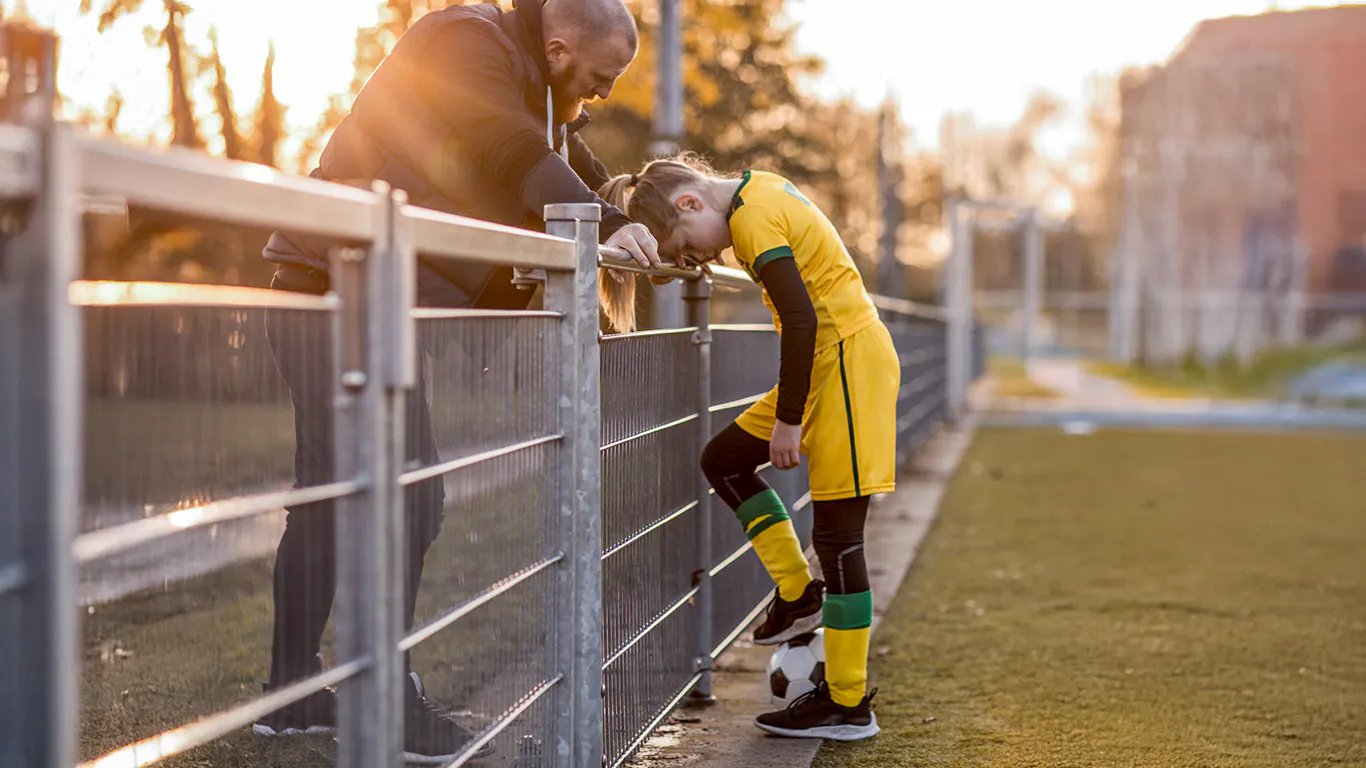
76%
of parents say school-related costs have caused at least one financial trade-off (100% minus the 23.9% who said none of the following applied to them).
- Made only minimum payments on a credit card — 29%
- Postponed a financial goal — 28%
- Delayed paying another bill — 26%
- Cut back on everyday essentials — 25%
- Prevented a child from participating in an activity over cost — 19%
Confident Anyway
Despite everything above, most parents describe themselves as confident heading into this year — and that confidence barely wavers even among the households carrying the most debt.
70%
of parents feel confident they can cover this year's school costs without going into more debt (34.9% very confident, 35.1% somewhat confident).
That confidence holds up in a way that is hard to square with the numbers above it. Behavioral economists sometimes call this optimism bias: a tendency for people already carrying a heavier debt load to discount the risk that new spending adds to it.
How debt load shapes what comes next
% of each group
| Group | Plan to spend $1,000+ this year | Relying on financing more than 3 years ago | Confident they can cover costs without more debt |
|---|---|---|---|
| No current school debt | 32% | 30% | 76% |
| $1–$999 in school debt | 37% | 61% | 65% |
| $1,000 or more in school debt | 86% | 75% | 68% |
Source: Accredited Debt Relief 2026 Back-to-School Survey. No current school debt (n = 405); $1–$999 in school debt (n = 353); $1,000 or more in school debt (n = 282).
Parents already $1,000 or more in debt are the most likely of any group to keep spending and the most likely to say they are leaning harder on credit, yet they're blindly confident they'll get by. It's a clear sign that the back-to-school debt cycle is likely to repeat, especially if existing debt is not addressed. Resolving that debt is not only a matter of getting through one shopping season; for many families it is the difference between a fresh start each fall and a balance that never actually clears.
Why wait? If school costs have turned into a balance that keeps following you past September, talking to a debt specialist costs nothing and carries no obligation. Accredited Debt Relief can walk through your options and help you find a path that actually resets the cycle, instead of just getting you through to the next one.
Related Reading

The Cost of Keeping Up: The Sacrifices Americans Make to Manage Their Debt

Living on Credit: How Everyday Expenses Are Driving American Debt
Frequently Asked Questions About Back-to-School Debt
 How much back-to-school debt are parents carrying?
60% of parents currently carry some level of school-related debt, and 27% already owe $1,000 or more before this year's spending begins, according to the Accredited Debt Relief 2026 Back-to-School Survey.
Do parents keep spending even after they're already in debt?
Yes. Among parents who already carry $1,000 or more in school-related debt, 86% still plan to spend at least $1,000 more per child this year.
Are parents relying on financing more than they used to?
53% say they rely on financing more than they did three years ago, and that climbs to 75% among parents who already carry $1,000 or more in school debt.
How do most parents pay for school costs?
64% use debit or cash, but many combine methods: 32% carry a credit card balance, 22% use a Buy Now, Pay Later service and 13% turn to a cash advance.
How long does it take to pay off back-to-school debt?
Only 23% pay it off within the same month. 60% take longer than a month, and 25% say they typically still carry a school-related balance into the holiday shopping season most years.
Are parents still paying off school costs by the holidays?
More than half (54%) say they are still carrying back-to-school debt when the holiday shopping season begins.
When does the financial pressure of school costs feel worst?
39% feel it most before school even starts, during summer shopping, and another 22% feel it most in the first month of school. Only 11% say they don't feel significant pressure from school costs.
What trade-offs do families make to cover school costs?
76% say school costs have caused at least one financial trade-off — most commonly making only minimum payments on a credit card (29%), postponing a financial goal (28%) or delaying another bill (26%).
Are parents confident they can cover this year's costs without more debt?
70% feel confident overall, and that holds up even among parents already deep in debt: 68% of those carrying $1,000 or more in school debt still feel confident, despite the added spending ahead of them.
What percentage of parents feel financial pressure from school costs?
89% of parents say school-related costs put some level of financial pressure on their household, according to the survey.
How to cite this research. These statistics are free to use and reference with attribution. Please credit the Accredited Debt Relief 2026 Back-to-School Survey and link to this page so readers can see the full methodology and results.
Accredited Debt Relief 2026 Back-to-School Survey. Conducted by Centiment, 2026. https://www.accrediteddebtrelief.com/back-to-school-debt-survey
The information on this site is provided as a general resource and does not constitute legal, tax, or financial advice.